Are the Swimming Pigs in the Bahamas Dangerous? The Honest Risk Record

Are the swimming pigs in the Bahamas dangerous? Not in the way most people picture it. The one documented medical case tied to swimming with the pigs is a 2018 report of a severe leg infection, and the cause wasn't a bite, it was an open wound meeting warm seawater. Seven pigs died at Big Major Cay in 2017, which raised a separate set of questions about how visitors feed them, not about visitor safety. We checked the record, the feeding rules, and how a staffed beach 30 minutes from Nassau differs from the wild Exuma herd, current as of August 2026.
Quick answer
Swimming with the pigs in the Bahamas is not statistically dangerous to humans in the way headlines suggest. The one documented case is a 2018 infection report involving a man who already had an open wound before he got in the water, and no bite injuries appear in the public record. Seven pigs died at Big Major Cay in 2017, a separate issue tied to how they were being fed, not to visitor safety.
Key takeaways
- The 2018 medical case involved a 74-year-old man, an existing skin biopsy wound, and Shewanella bacteria, not a pig bite
- Seven pigs died at Big Major Cay in 2017 after eating sand mixed in with food thrown on the beach
- Feed only pitted fruit and vegetables, in the water, never on the sand or held out on land
- Pregnant travellers are excluded from nearly every operator; some also exclude back, heart and mobility conditions
- The Exuma herd is feral; the Nassau-side pigs are handled daily and behave more like pets
- Cuts on coral or the boarding ladder and sunburn on an open boat cause more trouble than the pigs do
Who Should Reconsider
If you have an open cut, wound, or recent biopsy site
wait until it's fully healed, or skip the water this trip. This is the one documented risk factor on record.
If you're pregnant
nearly every operator here excludes you; check the restrictions table below before booking.
If you have a heart condition, back problem, or mobility limitation
several operators exclude these too; call ahead and ask directly rather than assume.
If you're traveling with a toddler
minimum ages run from 2 to 5 depending on the boat; check the specific age limit before you book.
If you're worried about the pigs biting
feed only in the water, never on the sand, and keep your hand flat and open rather than holding food out.
The Kinds of Risk, Separated
The pigs
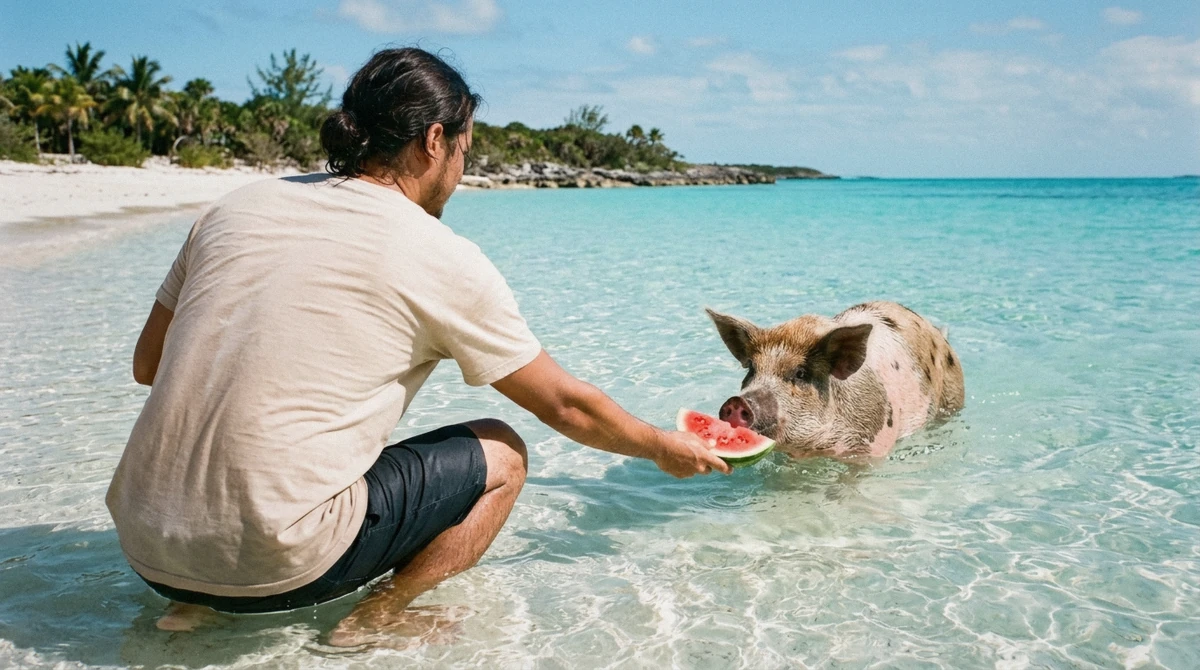
Pigs bite when food is involved, mistaking fingers for the fruit they expect. The feral Exuma herd is pushy around visitors carrying food; the Nassau-side animals covered on this site are operator-raised and handled daily, and reviewers routinely describe them as closer to pets than wild animals. Feed with a flat, open hand or toss food into the water rather than holding it out, and this risk drops close to zero.
A pig that doesn't get the reaction it wants from one visitor will usually just paddle toward the next one rather than press the issue.
The water
The real documented risk sits here, not with the animals themselves. The one serious infection on record started with an open wound in warm seawater, not a pig, and the full case is below.
The boat
Cuts on coral or a boat's boarding ladder come up more often in reviews than anything pig-related. Watch your step getting in and out, and tell your guide about any existing cut before you go in the water.
The sun
A full day on an open boat in the Bahamas sun burns more visitors than any other single factor on these tours. Reef-safe sunscreen, a hat and reapplying after every swim matter more than most travelers plan for.
The Risks in the Order They Actually Happen
We have watched a lot of these boats come back. The injuries people arrive home with are almost never pig-related.
| Risk | How often we see it | What prevents it |
|---|---|---|
| Sunburn on an open boat | Every trip | Reef-safe sunscreen before boarding, reapplied after the reef stop |
| Seasickness in chop | Common in winter fronts | A catamaran instead of a speedboat, and a morning departure |
| Cuts on coral or the boarding ladder | Occasional | Fins on in the water, hands on the rail going up |
| Infection in an existing wound | Rare but documented in 2018 | Stay out of the water with an open wound, which operators enforce anyway |
| A nip from a pig reaching for food | Rare on the staffed beaches | Feed flat-palmed, in the water, only what staff hand you |
What the Record Actually Shows
The most cited concern people search for is a single 2018 case report published in Case Reports in Infectious Diseases by Dretler, Jacob and Rouphael, titled 'Swimming with the Pigs: A Case of Severe Soft Tissue Infection during a Caribbean Vacation.' A 74-year-old man swam with the pigs and in resort pools during a Caribbean trip and developed severe cellulitis in his right leg at the site of a skin biopsy taken two weeks earlier. Blood cultures grew Shewanella, a marine bacterium. He was treated with cefepime for two weeks, needed no surgery, and made a full recovery. You can read the case report itself at pmc.ncbi.nlm.nih.gov/articles/PMC6220401 for the clinical detail.
The practical lesson is straightforward: an open wound meeting warm seawater is the real risk, not the pig. Nobody with a healing cut, a recent biopsy, or a fresh tattoo should be getting into that water regardless of what's swimming in it, on any beach.
The other incident people ask about happened in 2017, when seven pigs died at Big Major Cay. Early reports blamed tourists giving them alcohol, but the finding that held up was sand: pigs were ingesting sand mixed in with food thrown onto the beach rather than fed in the water. It changed how the herd is managed rather than how visitors are treated, and it's the reason the feeding rule below exists.
Feeding Rules That Keep Everyone Safe
The Bahamian Ministry of Agriculture and Marine Resources asks visitors to follow a short list, and every operator we've checked backs it up:
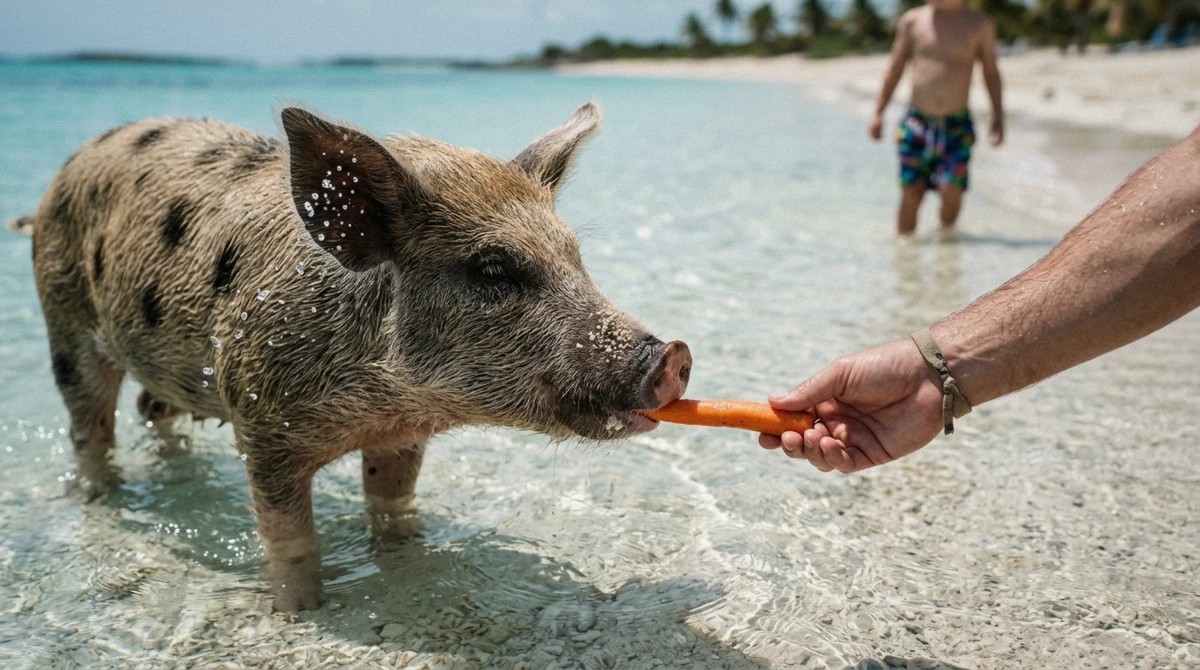
- Feed only pitted fruit and vegetables: carrots, apples, lettuce, watermelon
- Feed in the water, never on the sand
- No processed food, ever
- No alcohol, ever
- Use a flat, open hand, or toss the food, rather than holding it out
- Tell your guide about any open cut or wound before you get in
Wild Herd Versus Operator-Raised Herd
The pigs at Big Major Cay in the Exumas are feral and unowned, an estimated 50 to 60 animals as of a 2019 count, roaming freely with no assigned handler. The pigs you'll meet on a Nassau boat tour are a different animal entirely: operator-raised, staff-fed and rotated off the beach on a schedule, which changes both their behavior and the risk profile. One operator we checked, Sandy Toes on Rose Island, rotates its pigs off the beach every 30 minutes so the animals get to rest, a level of active management the wild Exuma herd simply doesn't have.
Volunteers at Big Major Cay have installed freshwater tanks and a piglet nursery since the 2017 deaths, with a vet traveling out from Nassau periodically, but there's no resident vet on the cay itself, which is the practical difference that matters most if a pig needs care between visits. A guest who has only seen photos of the Exuma herd often expects the same free-roaming energy at Rose Island and is surprised by how calm and routine the Nassau version feels. For the fuller picture of how the two locations differ beyond safety, our guide to reaching the actual Exuma beach breaks down the trip.
Who Should Not Go
Beyond the medical exclusions in the table, several boats also turn away certain items outright: large bags, coolers, strollers and electric wheelchairs aren't allowed aboard, and one operator won't permit chewing gum on the boat at all. None of that is a safety rule exactly, but it's worth knowing before you pack for the day. Every restriction below reflects a rule an actual operator on this site enforces, not a guess.
| Restriction | Typical rule on Nassau tours | Why it exists |
|---|---|---|
| Pregnancy | Excluded by nearly every operator | Boat motion and open-water entry both carry real risk during pregnancy |
| Minimum age | 2 years old on the most permissive boat, 5 on the catamaran | Younger children need close supervision entering open water around animals |
| Heart condition | Excluded by several operators | Boat travel and sun exposure over several hours add real strain |
| Back problems | Excluded by several operators | Boat motion and the ladder in and out are hard on an existing injury |
| Mobility impairments | Excluded by several operators | Getting into open water from a boat ladder needs real physical ability |
| Epilepsy | Excluded by several operators | Open water raises the risk if a seizure happens mid-swim |
| Open wounds or bleeding | Kept out of the water on most boats | The one documented medical case on record started exactly this way |
Can Children Go Safely?
Yes, on the right boat. Check the minimum age on your specific boat before you book rather than assume one applies across the board, since it runs from 2 years old on the most permissive tour up to 5 on the catamaran. The pigs themselves are calm and staff-managed on the Nassau side, and most operators keep kids close during the actual swim.
The bigger practical risk for children on these trips is sun and boat motion over several hours, not the animals, so plan shade, water and motion-sickness precautions the same way you would for any half-day boat trip. A traveler who is pregnant should read the restrictions table above first, since the exclusion applies regardless of how many other family members are cleared to go, and anyone with open wounds, adult or child, should sit this one out until healed. Season matters here too, since a winter front makes the crossing rough for small children: the month-by-month guide covers that, and what each boat costs shows which ones include the landing fee collected in cash on the sand.
If Something Goes Wrong
The emergency number in the Bahamas is 919, and 911 also works. Princess Margaret Hospital in Nassau is the main public hospital; Doctors Hospital is the private option. On the water, you're typically 25 to 30 minutes from either, roughly the same crossing time it took to reach the pigs in the first place, so factor that into how seriously you take the feeding rules and the open-wound advice above.
Guides carry basic first-aid on board, and every operator we checked offers free cancellation up to 24 hours if a health concern comes up before departure. If you're prone to seasickness, motion sickness medication is worth taking before you board rather than after symptoms start, since there's no pharmacy stop once the boat leaves the dock.
We wouldn't call swimming with the pigs reckless, and we wouldn't call it risk-free either. The record is thin because the real incidents are thin: one infection case tied to a wound that had nothing to do with the animal, and one bad year for the pigs themselves that led to better feeding rules rather than a lasting danger to visitors. Read the restrictions table honestly, tell your guide about any open cut before you get in, and the rest of the risk here is closer to sunburn than headline.
We've taken plenty of first-time visitors out on these boats over the years, and the moment that actually rattles most people isn't the pigs at all, it's the first step off the ladder into open water, which passes in about ten seconds once they realize the animals are more interested in the fruit than in them.
Frequently Asked Questions
What should visitors avoid doing at Pig Beach?
Avoid feeding pigs on the sand, avoid processed food or anything with alcohol, and keep your hand flat and open when a pig takes food so fingers stay clear of the bite. Anyone with an open cut or recent wound should also avoid the water entirely that day, and large bags, coolers or strollers are best left at the hotel since several boats won't take them anyway.
What killed the swimming pigs in the Bahamas?
Seven pigs died at Big Major Cay in 2017. Early reports blamed tourists giving them alcohol, but the finding that held up pointed to sand, ingested along with food thrown onto the beach rather than fed properly in the water.
Have the swimming pigs ever bitten anyone?
There's no public record of a serious bite injury tied to these tours. Pigs will nip at fingers if food is held out directly, and that is why the feeding rules call for a flat open hand or tossing food into the water instead.
Why are there pigs swimming in the Bahamas?
There's no single confirmed origin story, and several local legends circulate about how the first pigs ended up on the beach. Rather than repeat unverified folklore, we stick to what is documented: two distinct herds now live near populated tourist areas, one feral in the Exumas and several operator-raised near Nassau.
Is there a weight or age limit for swimming with the pigs?
Minimum age is the limit that actually applies here, running from 2 years old on the most permissive Nassau boat up to 5 on the catamaran trip. No operator on this site publishes a weight limit.
What's the emergency number if something happens on the water?
Call 919 or 911. Princess Margaret Hospital, the main public hospital, and Doctors Hospital, the private option, both sit about 25 to 30 minutes from the water by boat, the same crossing time it takes to reach the pigs.